
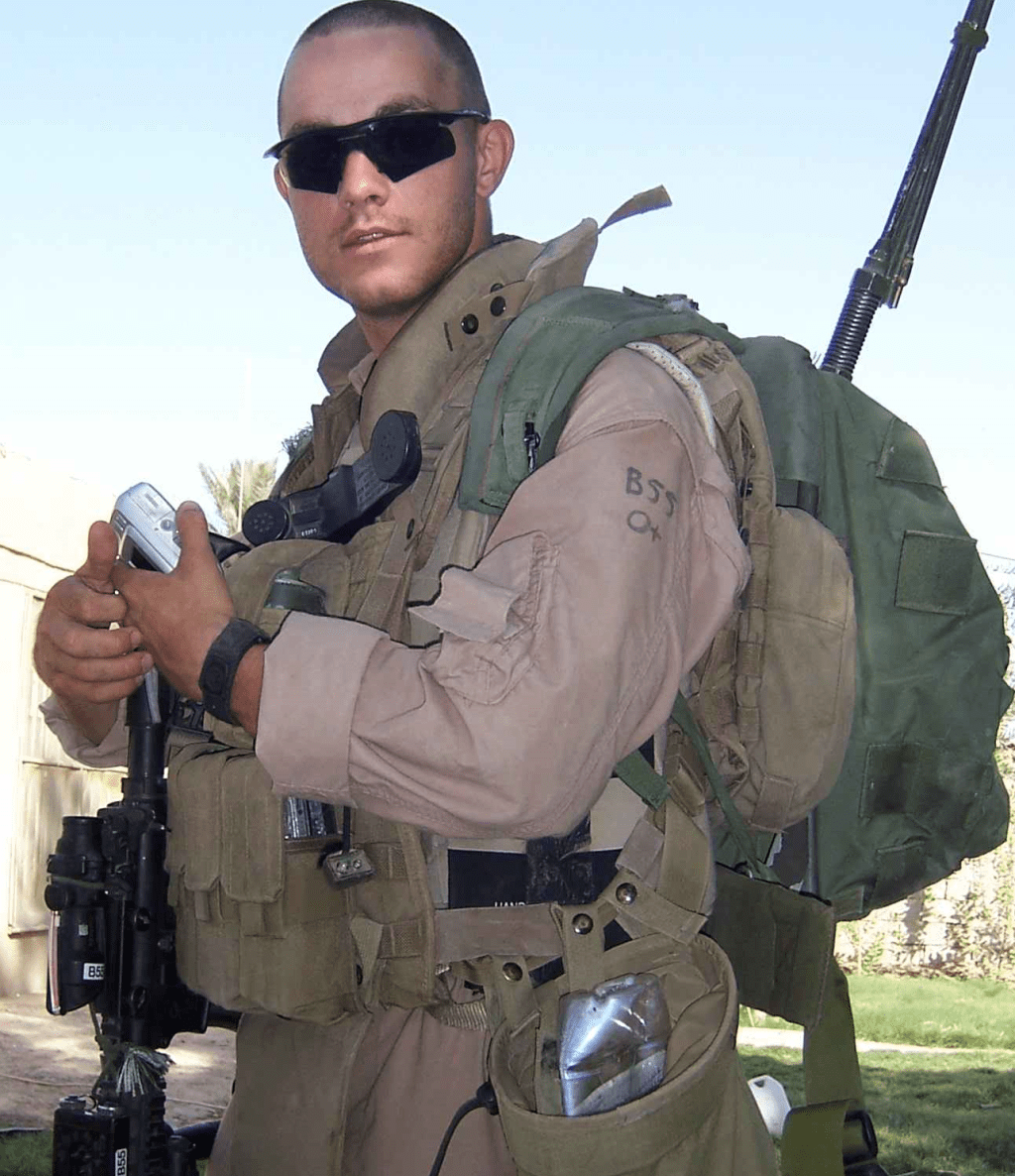
In 2006, my unit had been training for months to go to Iraq. From the moment I entered Boot Camp, the Marine Corps’ drill instructors had been preparing us to fight in the desert against insurgents. That had continued through the School of Infantry and the Amphibious Reconnaissance Course which taught basic occupational skills. And after all the training, the specialized CAX course and unit training fine-tuned us for house-to-house fighting and desert warfare.
I remember peaking over the armored lip of the 7-ton truck at the black night of Fallujah. Dogs were barking and the city was sleeping as we snuck through into the military base. This country, this war zone, was a celebrity for me. Everything I’d been training for in the last 2 years was now about to be put to the test.
And we were tested.
My unit suffered heavy casualties and had to be reinforced by fresh Recon Marines from the US midway through the deployment. If we stepped outside, we were shot at. Mortars would land so predictably that we used to bet on the time of day they would come.
And it was a relief. We came home and we hugged our families and slept.
Fast forward two years and my second deployment has now come to an end. I had volunteered to return to Iraq to fight again. And yet, this time, our enemies were manning check points. The Iraqi police were running in formation through the streets. You could stand outside and take a piss without flak and kevlar – without fear of being shot.
And when we came home the nightmares started. Why?
Baggage
Think of your mental stress capacity as a hiking backpack. In the Marine Corps, we call this a ruck. Let’s pretend you have a project at work or a car repair. It may add some stress but definitely manageable. Imagine a 5lb dumbbell going into the backpack.
Now you have serious marital issues – maybe to the point of divorce. Or your 15-year old dog dies and you have to explain it to your kids. This adds a serious weight. 30lb goes into the bag. It’s manageable but not for the long term. You can picture yourself learning forward to offset the weight. And the straps now dig a bit into your shoulders. You couldn’t walk around like this for long.
But you also have ways of removing stress. You like to paint or workout. You remove 10lb. It’s this process of adding weight and removing weight that enables us to get up, put on our ruck, and soldier into the day.
As you accumulate stress, you need to be aware of what you’re carrying. You can carry weight for others. You need to take some out. You get hit by a big deadline and need to recognize that you just dumped some in. What are you already carrying in there?
Combat – the 70lb weight
In my talks, I literally demonstrate this on a volunteer. I put plates and dumbbells into a ruck and you can watch as it affects their movement and posture. After I go through various weights, putting them in and taking them out, I bring out a large stack of bricks duct taped together with black duct tape.
Whatever you’ve got in your ruck when that weight goes in is going to make it worse. People who suffered when we returned from Iraq turned out to be people who either couldn’t adjust to reducing the weight or went in with a significant burden already.
When we fought during my first deployment, we were releasing the tension that had been wound into us. For years we had been tightened and torqued and geared. Then they released us and the spring unwound. We were RPG-ed, blown up, and shot at. And we returned fire. We returned home and had scars from the trauma but the tension had been released. Some of the weight had been removed. Now it was up to us to work on steadily removing the rest of the weight of combat.
In 2005, 3/1 Marines were in Haditha to counter the insurgents there. For 3 months they expected another major battle like in Fallujah. But it never came. When the IED blast went off killing a Marine and wounding others, the Marines snapped. Their tension released and they killed 25 unarmed civilians including women and children.
During my second deployment, there was also no release of tension. Every time we stepped out of the wire, we expected the fight and each time we returned, we breathed an outward sigh of relief but an inward constriction of the pressure. And when we returned home, that tension sought an outlet.
We worked out. We wrote down our thoughts. We argued with our families over anything. And when that didn’t work we drank. We smoked. We medicated. We fought. And if that didn’t work, we killed ourselves and others. Slowly or immediately.
Releasing the Pressure
This is a somber topic and while the above is an extreme case of monumental stress managed over a lifetime, it is relevant to everyone. Your own smaller stressors over the government, finances, projects, or relationships will mount if you don’t seek to remove the weight.
Individuals and teams are going to build up stress. Individuals and teams need to have healthy outlets for that stress. Sometimes people need to go home and be alone and sometimes that’s the worst possible thing for them.
Unfortunately, there is no magic solution for everyone. But an empathetic leader and a compassionate team will rally around each other, recognize the symptoms or drop in productivity, and help each other rather than turn and begin biting the very people who understand them the best.
What do you do to remove weight from your ruck? What does your team need right now? A team building exercise? An ice cream luncheon? A day off? To be most productive in a big project, sometimes that means stopping work for a moment.
 Common Goal Leadership
Leave a comment